
Florida’s sea turtle nesting season has begun, according to the Florida Fish and Wildlife Conservation Commission (FWC). Florida’s shorelines serve as critical nesting habitat for several species of threatened and endangered sea turtles.
Nesting typically starts in March along the southeast Atlantic coast, from Brevard County south to Broward County. On the Gulf Coast and north Florida beaches, nesting generally begins in April or May.
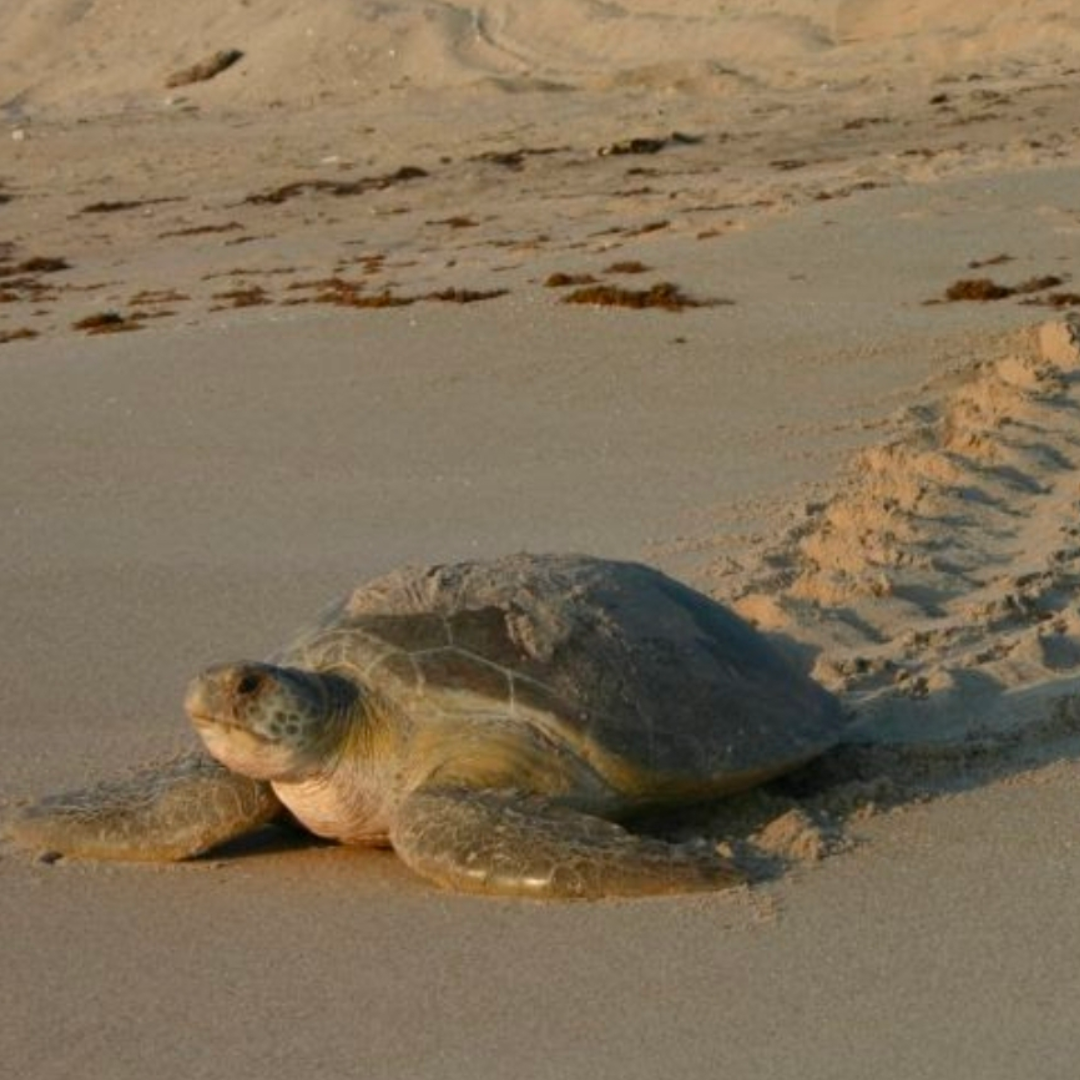
Beachgoers can help support the success of this year’s nesting season by following simple protective measures:
- Minimize beach lighting: Artificial lights on or near the beach can disorient nesting females and hatchlings, drawing them away from the ocean toward hazards. Use flashlights or cellphones only when necessary at night. Residents and visitors should turn off unnecessary porch, parking, or deck lights and close curtains after dark. If lighting remains visible from the beach, ensure it uses long-wavelength bulbs, is mounted low, and is shielded.
- Maintain distance from turtles: Approaching nesting sea turtles closer than 50 feet can cause them to abandon the beach before completing nesting. If a turtle changes its behavior, observers are likely too close. It is illegal to harm, disturb, or handle nesting sea turtles, their nests, eggs, or hatchlings.
- Keep beaches clear: Female turtles crawl far up the beach to lay eggs in safer locations away from tides. Obstacles such as trash, holes, beach toys, gear, furniture, or fishing line can block nesting females or trap hatchlings emerging from nests. Food scraps attract predators like raccoons and crows that eat hatchlings. Litter can entangle sea turtles and other wildlife.
To help, properly dispose of or recycle all trash, fill in human-made holes in the sand, and remove all beach equipment before sunset. Dispose of fishing line (monofilament) at recycling stations; locations are available at mrrp.MyFWC.com.
For additional details on protecting sea turtles and how to assist, visit MyFWC.com/SeaTurtle or review the FWC’s “Be a Beach Hero” brochure. Report sick, injured, entangled, or dead sea turtles to the FWC Wildlife Alert Hotline at 888-404-FWCC (3922).
SOURCE: FLORIDA FISH AND WILDLIFE CONSERVATION

